
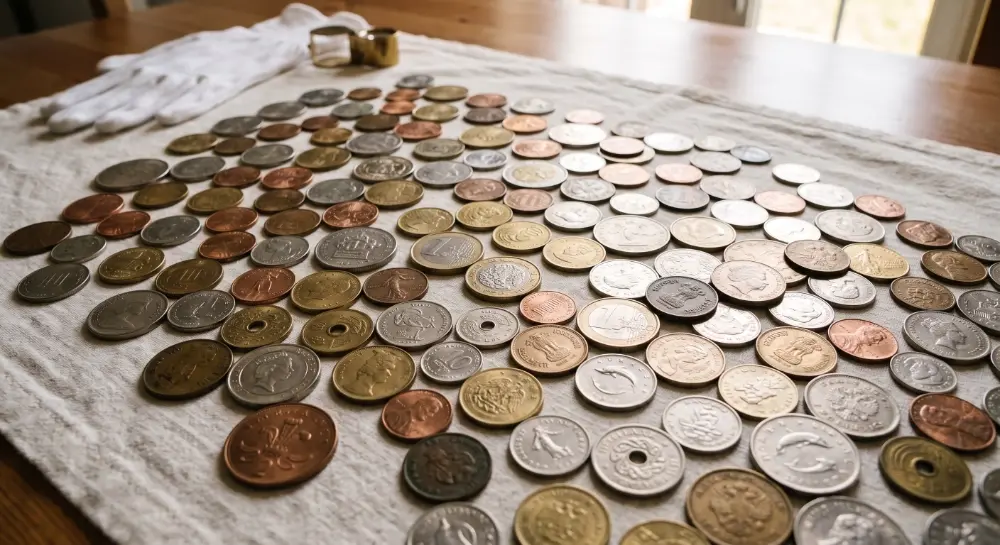
Learn how to start a coin collection from scratch - what to collect, essential tools, where to find coins, and how to store them properly. Perfect for all ages.
Coin collecting is one of the oldest hobbies in the world - and one of the most rewarding. Every coin tells a story: the country that made it, the era it circulated in, the leader whose face it bears. Whether you're eight years old flipping through pocket change or eighty years old building a curated world collection, starting is easier than most people think.
This guide walks you through everything you need to know to start a coin collection the right way - from choosing your focus and finding your first coins to storing them properly and understanding what makes a coin valuable.
Why Start a Coin Collection?
Before diving into the how, it's worth understanding the why - because coin collecting offers something genuinely different from other hobbies.
It's educational in a way nothing else is. Holding an authentic coin from Tanzania or Armenia or Belarus connects you to that country's history, economy, and culture in a way a textbook never can. Each coin is a physical artifact of a real place and time.
It spans every age and budget. A compelling collection can start with a $0.99 coin from Sweden or a handful of spare change from your travels. You don't need a significant budget to build something meaningful.
It compounds over time. Unlike most hobbies where you consume and move on, a coin collection grows. After one year, you might have coins from 12 countries. After five years, you have a genuine archive. The longer you collect, the richer the whole becomes.
It's tangible. In an increasingly digital world, there's something valuable about a physical object you can hold, study, and pass down.
Step 1: Choose Your Focus
The most common mistake new collectors make is collecting everything at random. A focused collection is more satisfying to build, easier to manage, and more interesting to others.
World Coins
Collecting coins from different countries is one of the most popular approaches for beginners - and for good reason. The variety is enormous, prices are accessible, and every new coin opens a window into a different culture. This is the approach that Coin & Currency Club is built around: one new country, every month, with authentic coins and the history behind them.
United States Coins
Many American collectors start closer to home. The US has produced an extraordinary range of coinage - from Lincoln cents and Roosevelt dimes to state quarters and commemorative silver dollars. Collecting a complete set of US state quarters (50 states, released 1999–2008) is a classic first project that's both achievable and genuinely interesting.
Thematic Collections
Some collectors organise around a theme rather than a country: coins featuring animals, coins from empires that no longer exist, coins struck during wartime, or coins from countries that have since changed their currency. Thematic collecting gives you a creative lens that makes every new coin a potential addition.
Ancient Coins
Authentic ancient Roman, Greek, or Byzantine coins are more affordable than most people expect - often $10–$30 for a genuine piece that's over 1,500 years old. This is one of the most remarkable entry points into history that any hobby can offer. Imperial Roman coins from AD 306–410 are a tangible example of what's accessible.
Step 2: Get the Essential Tools
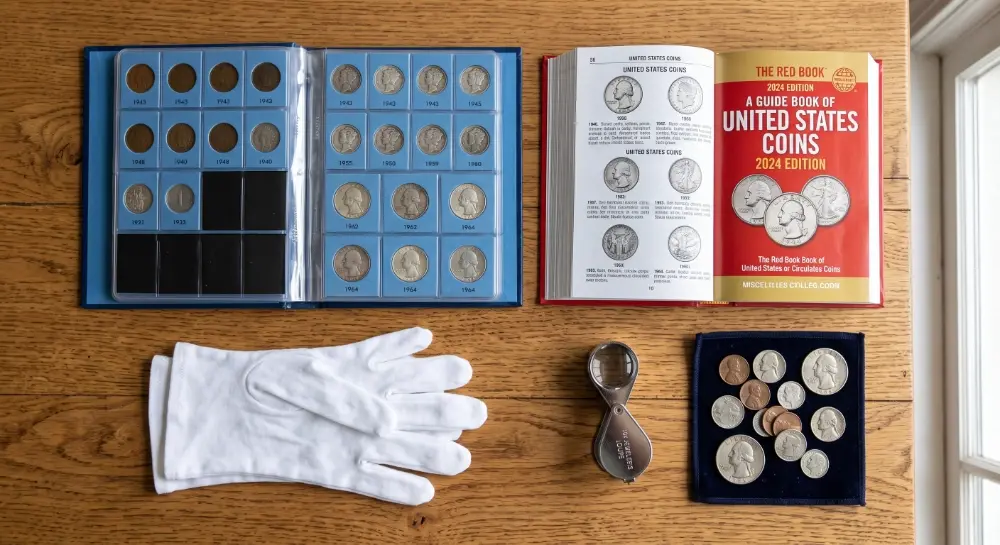
You don't need much to start. A few inexpensive tools will protect your coins and help you examine them properly.
A Coin Album or Folder
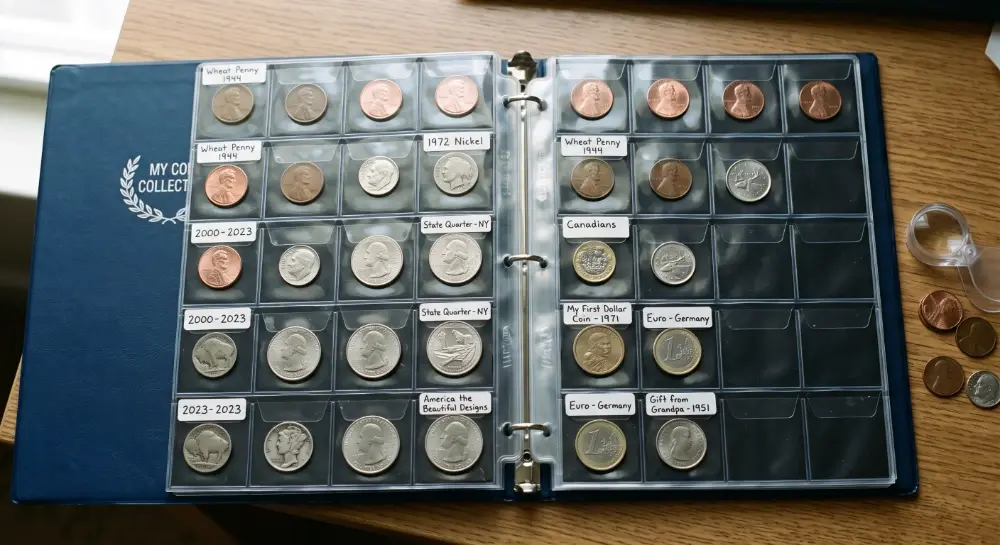
Loose coins stored in drawers or bags get scratched and damaged. A coin album - with individual plastic pockets for each coin - protects them and lets you view both sides without handling. Whitman coin folders are the traditional choice for US coins; for world coins, a multi-pocket binder with individual coin capsules works well.
A Jeweler's Loupe
A loupe (a small magnifying glass) is the coin collector's essential tool. It lets you examine fine detail, read tiny inscriptions, and spot the difference between an ordinary coin and something special. A 10x loupe is the standard. A good loupe and lanyard is worth adding to your kit from day one.
A Soft Cloth or Cotton Gloves
Skin oils are the enemy of coins. Always handle coins by their edges, never by the face or reverse. Cotton gloves, or a soft microfiber cloth on your work surface, prevent fingerprints and keep your collection in the best possible condition.
A Reference Book or App
For US coins, the Red Book (A Guide Book of United States Coins) is the bible - updated annually, it lists every coin ever minted, with values at different grades. For world coins, the Krause Standard Catalog of World Coins is the equivalent. The PCGS CoinFacts app is a free digital alternative that covers most US coins with photos and values.
Step 3: Find Your First Coins
Start With Pocket Change
Seriously. Tip your change jar onto a table and look at what you have. You probably have coins from multiple countries if you've travelled, coins from different decades, and maybe something genuinely interesting. Many collectors started this way, and it costs nothing.
A Subscription Box
The fastest way to build a diverse world collection without knowing where to start is a curated subscription. Coin & Currency Club sends authentic coins and banknotes from a new country every month, along with cultural guides, maps, and a mini-documentary. It's the equivalent of having an expert build your collection for you - ideal for beginners who want quality coins without the research.
Coin Shows and Dealers
Local coin shows are one of the best-kept secrets in the hobby. Dealers bring thousands of coins to examine and buy, prices are negotiable, and you'll meet people who can teach you more in an afternoon than most books can. Search for your nearest coin show through the American Numismatic Association website - ana.org - lists shows by state.
Online Marketplaces
eBay has a vast coin section, and you can find genuine coins at fair prices if you buy from sellers with strong feedback and clear photos. Start with established categories and avoid anything priced significantly below market - fakes exist. PCGS and NGC (the two major coin grading services) both have online marketplaces of authenticated, graded coins if you want certainty.
Estate Sales and Thrift Shops
Old coin collections sometimes surface at estate sales, often priced by people who don't know what they have. It requires patience and some knowledge to spot what's valuable, but the finds can be extraordinary.
Step 4: Learn How to Handle and Store Coins Properly
Improper handling is how most coin damage happens, and it's almost always irreversible.
Always hold coins by the edge. Pick them up between your thumb and index finger at the rim - never touch the faces.
Never clean your coins. This is the cardinal rule of coin collecting. Cleaning removes the natural patina (the thin layer of oxidation that forms over time) and can reduce a coin's value dramatically. A coin that looks "dirty" to an untrained eye is often in better condition than one that's been polished.
Store in a stable environment. Humidity and temperature swings are the enemy. Store your collection away from basements (damp) and attics (temperature extremes). Aim for room temperature and moderate humidity. Individual coin capsules or holders made from inert plastics (labelled PVC-free) are the safest long-term storage.
Keep records. Note where each coin came from, when you acquired it, and what you paid. This information matters for insurance, for passing the collection on, and for your own enjoyment of the hobby.
Step 5: Understand Coin Grading and Value
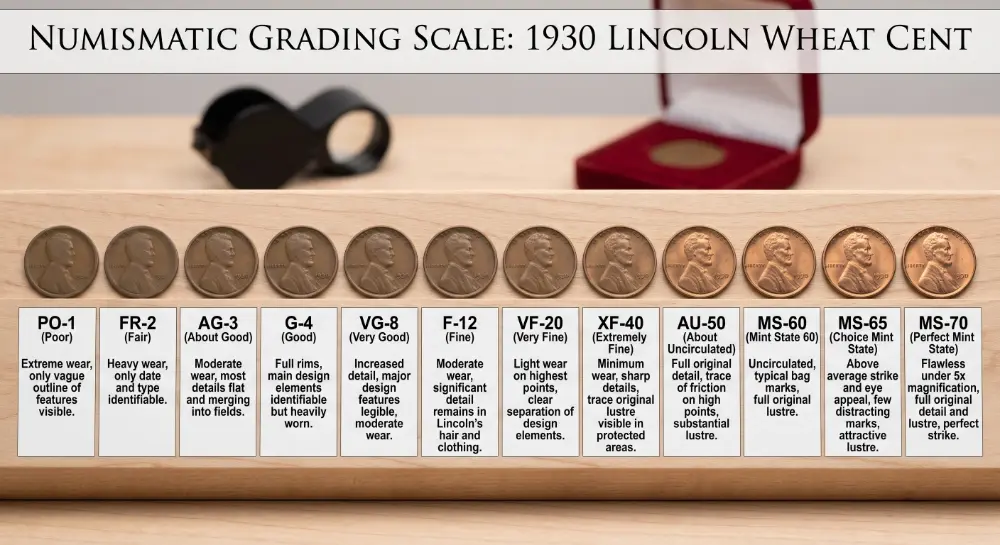
Not all coins of the same type are worth the same amount. Condition is everything, and the industry uses a standardised grading scale to describe it.
The Sheldon scale runs from 1 (Poor - barely identifiable) to 70 (Perfect Uncirculated - flawless). Key grades you'll encounter:
Grade | Description |
Good (G-4) | Heavily worn, major design visible |
Very Fine (VF-20) | Moderate wear on high points |
Extremely Fine (EF-40) | Light wear on highest points only |
About Uncirculated (AU-50) | Slight wear, most mint lustre present |
Mint State (MS-60 to MS-70) | Never circulated, varying degrees of marks |
For beginner collectors, formal grading matters less than buying coins you find genuinely interesting. As your collection matures and values increase, professional grading services (PCGS and NGC) can authenticate and grade coins in tamper-evident holders - useful for valuable pieces.
Step 6: Connect With the Community
Coin collecting is a hobby that rewards curiosity and conversation. Some of the best learning happens through other collectors.
Join the American Numismatic Association (ANA) - the largest coin collecting organisation in the US, with resources, shows, and a library. Attend a local coin club meeting. Browse Reddit's r/coins and r/worldcoins communities, where experienced collectors freely share knowledge and feedback on new finds.
And if you want to travel the world one coin at a time without leaving home, explore how Coin & Currency Club works - each monthly packet comes with the cultural context that makes every coin more than just metal.
FAQ
How much does it cost to start a coin collection?
You can start for free by sorting through your own change. A meaningful beginner collection - including basic storage supplies - can be built for under $50. World coin subscriptions typically run $15–$20 per month and are one of the most cost-effective ways to build a diverse collection quickly.
What is the best coin to collect as a beginner?
US State Quarters (1999–2008) are the classic beginner set - 50 coins, widely available, affordable, and genuinely varied. For world coins, start with countries you find interesting or have visited. Authenticity and personal connection matter more than monetary value when you're starting out.
Should I clean my coins before storing them?
No - never clean coins. Cleaning damages the surface and removes patina, which almost always reduces a coin's value and desirability. Even a cloth polish can leave micro-scratches visible under magnification. A coin's natural aged surface is part of its character and history.
How do I know if a coin is valuable?
Condition, rarity, and demand are the three factors. A coin in mint condition is worth far more than the same coin heavily worn. Check the Red Book for US coins or the PCGS CoinFacts app for current values. For world coins, the Krause Standard Catalog is the reference. Unusual errors (misprints, double strikes, off-centre strikes) can also make otherwise common coins valuable.
What's the difference between a coin and a token?
Coins are issued by a government as official currency. Tokens are privately issued - they were used as substitutes for currency at specific merchants, transit systems, or events, and are generally not legal tender. Both are collected, but they're catalogued separately.
At what age can children start coin collecting?
Children as young as five or six can begin with simple, guided collecting - sorting coins by country, matching designs to flags, or filling in a state quarter map. The hobby scales naturally with age and curiosity. Many adult collectors trace their passion back to a coin a grandparent shared with them when they were young.
Conclusion
Starting a coin collection doesn't require expertise, significant money, or even a clear plan. It starts with curiosity - picking up a coin from somewhere unfamiliar and wondering about the story behind it.
From there, you choose a focus, gather a few basic tools, find your first coins, and learn as you go. The hobby rewards patience and attention, and it has a remarkable way of turning into a lifelong pursuit.
If you want to start with a guided, curated approach - receiving one beautifully selected country's authentic coins and currency each month - explore Coin & Currency Club membership. It's one of the simplest ways to build a world collection from day one.